
The first Magic: The Gathering World Championships took place in 1994 at GenCon in Milwaukee, Wisconsin. It was a small event by today’s standards, but it set the tone for competitive Magic. Most players remember that tournament for one deck above all others: Angel Stasis, piloted by champion Zak Dolan.
The list became iconic, studied, and discussed for decades. Yet the finals also featured another deck that deserves just as much attention, one that quietly hinted at where Magic deckbuilding was headed.
That deck belonged to Bertrand Lestree of France. While it didn’t win the championship, Lestree’s Zoo-style aggro list arguably had a deeper impact on how players thought about building decks. In an era when many strategies were still raw or experimental, his approach showed a clear, focused plan. It wasn’t just about playing strong cards. It was about efficiency, pressure, and understanding the metagame.
Check out the decklist below.
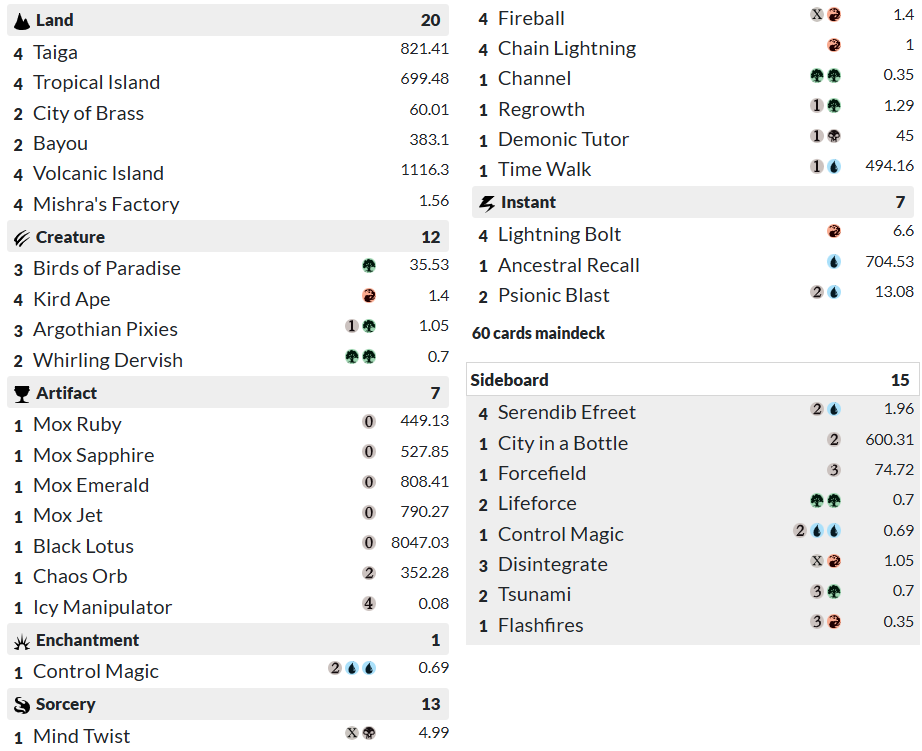
At its core, the Lestree Zoo deck looks surprisingly familiar even in 2025. The creature base is built around high-power, low-cost threats like Kird Ape, Argothian Pixies, and Whirling Dervish. These creatures come down early and hit hard, forcing the opponent to react. Backing them up is a suite of spells that pull double duty. Lightning Bolt, Chain Lightning, Psionic Blast, and Fireball all clear blockers while also pushing damage directly to the opponent’s life total.
What makes the list especially impressive is how tuned it already was for its environment. Argothian Pixies, for example, weren’t just random green creatures. They were excellent at blocking Juggernaut, a very real threat at the time. A 5/4 artifact creature for four mana was no joke in early Magic, and Lestree clearly expected to see it. That kind of metagame awareness feels normal now, but in 1994 it was far from standard.
The sideboard choices tell a similar story. Serendib Efreet, despite dealing damage to its controller each turn, survived Lightning Bolt and Chain Lightning, making it a strong option in certain matchups. Psionic Blast may also have been included with specific threats in mind, such as Serra Angel or opposing Serendib Efreets. These decisions show a player thinking beyond raw power and toward answers, resilience, and matchup dynamics.
Viewed through a modern lens, Lestree’s list isn’t perfect. There are inefficiencies and card choices that would be questioned today. But that’s not the point. What makes the deck remarkable is how clearly it captures the early DNA of aggro strategy. Just one year into Magic’s life, the fundamentals were already there: cheap threats, efficient burn, and conscious metagame choices. In that sense, the Lestree Zoo deck isn’t just a historical curiosity. It’s one of the earliest blueprints for how aggressive Magic decks would be built for decades to come.
Thanks for reading this MTG throwback deck.