For today’s throwback Magic: The Gathering deck, I stumbled upon this build while browsing the article “Decktech from Worlds ’94” on the Old School MTG blog. This deck was a standout in the competitive scene during the 1994 Magic: The Gathering World Championship, and it was played by none other than Mark Rosewater.
The deck represents an early blue-green aggressive strategy centered on fast creatures and combat tricks, illustrating how players in the game’s early years experimented with efficient creatures and explosive damage combinations. During this period, the competitive environment of Magic: The Gathering was still developing, and many deckbuilding strategies were relatively simple compared to modern tournament decks.
The main idea of the deck was to win quickly using cheap creatures supported by powerful buffs and mana acceleration. Cards such as Birds of Paradise and Llanowar Elves provided early mana ramp, allowing the player to cast threats faster than the opponent. Meanwhile, small flying creatures like Flying Men and Scryb Sprites could attack early and consistently. Because many of these creatures had low power, the deck relied heavily on pump spells and enchantments—such as Giant Growth and Unstable Mutation—to dramatically increase their damage output and apply pressure early in the game.
One of the most explosive elements of the strategy involved the card Berserk, which could double a creature’s power for a single attack. Combined with creatures that were already enhanced by pump spells or enchantments, this could result in extremely large bursts of damage that could end the game in a single combat step. During the early days of the game, Berserk was so strong that it became restricted in tournament play because it could produce extremely high damage numbers very quickly.
The deck also included several powerful artifact cards such as Black Lotus, Mox Emerald, Mox Sapphire, and Sol Ring. These artifacts were part of the early “Power” cards in Magic and allowed players to generate large amounts of mana very quickly. This acceleration helped the deck deploy threats faster and maintain tempo against slower strategies. The land base, including Tropical Island and Mishra’s Factory, supported both the blue-green color requirements and provided additional offensive pressure.
Decklist and Card Roles
Creatures (20)
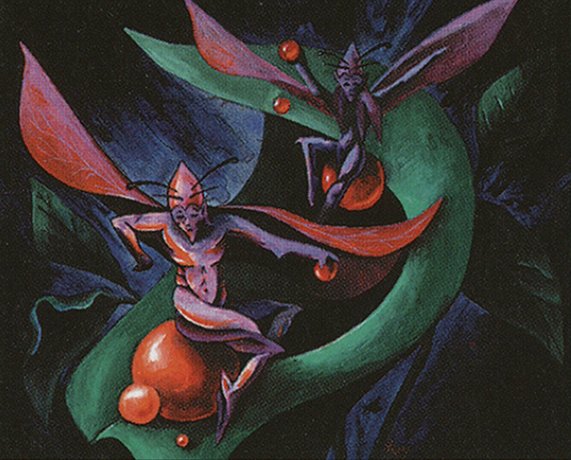
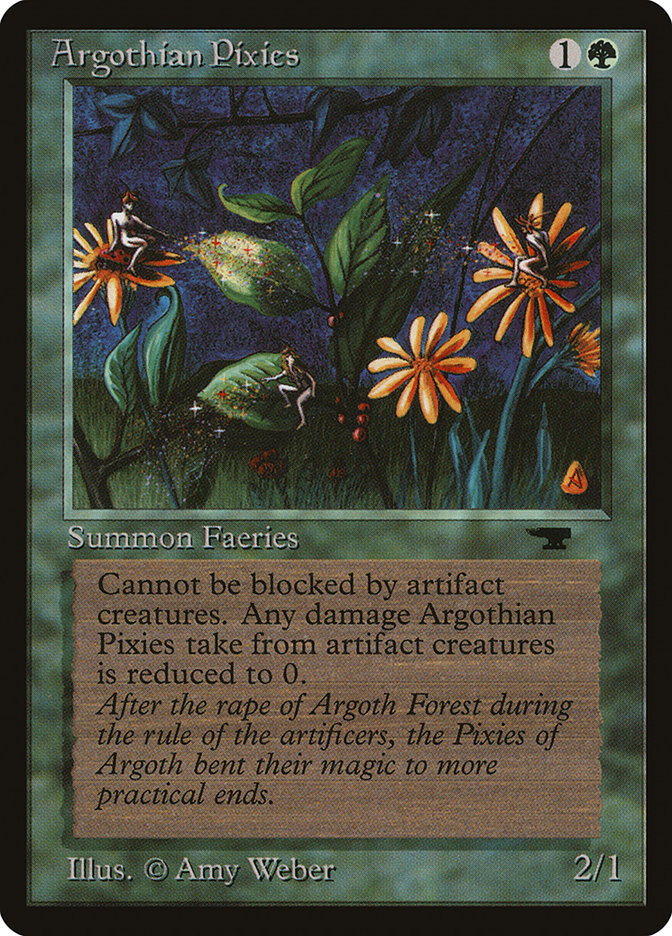
2 Argothian Pixies
A small creature with protection from artifacts. This ability was valuable because many early decks relied heavily on artifact creatures like Mishra’s Factory or artifact strategies.
4 Birds of Paradise
A mana-producing creature that accelerates the deck’s early game. It also has flying, which means it can become an unexpected attacker when combined with pump spells.
2 Elvish Archers
A defensive creature with first strike that can hold off opposing attackers while the deck prepares its offensive strategy.
4 Flying Men
A very cheap flying creature that can attack as early as turn one. It becomes extremely dangerous when combined with buffs like Unstable Mutation or Giant Growth.
4 Llanowar Elves
Another mana-producing creature that speeds up the deck’s ability to cast spells and creatures quickly.
4 Scryb Sprites
Small flying creatures that provide early pressure. Like Flying Men, they are perfect targets for pump spells to deal large amounts of damage quickly.
Role of the creature package:
The deck relies on cheap creatures and flyers that can attack early. Even creatures with very low power become lethal when enhanced with buffs.
Enchantments (8)
4 Concordant Crossroads
Gives all creatures haste. This allows creatures like Birds of Paradise or Llanowar Elves to attack immediately and enables surprise damage combos.
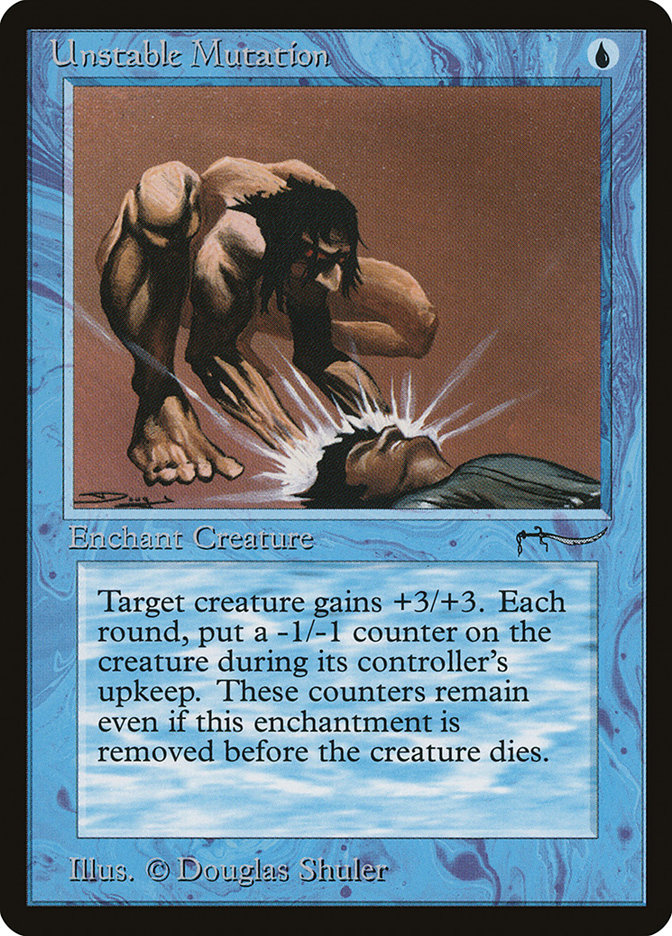
4 Unstable Mutation
An enchantment that gives a creature +3/+3 early in the game. When placed on a flying creature, it can create a fast and powerful threat.
Role:
These enchantments make small creatures much more dangerous and allow explosive early attacks.
Instants (6)
4 Giant Growth
A classic combat trick that gives +3/+3 until the end of turn. It can save creatures in combat or dramatically increase damage.
1 Ancestral Recall
One of the most powerful draw spells in early Magic, allowing the player to draw three cards instantly.
1 Berserk
The key finishing card of the deck. It doubles a creature’s power for a turn, often allowing a single huge attack to win the game.
Role:
These instants provide burst damage and card advantage, enabling sudden lethal attacks.
Sorceries (3)
1 Recall
Returns artifacts from the graveyard to the player’s hand, often retrieving powerful mana artifacts.
1 Regrowth
Returns any card from the graveyard to the hand, allowing reuse of powerful spells like Time Walk or Ancestral Recall.
1 Time Walk
Grants an extra turn, which often means another attack phase and more time to finish the opponent.
Role:
These spells provide utility and powerful recursion, helping the deck reuse key cards.
Artifacts (4)
1 Black Lotus
One of the most powerful mana cards ever printed, providing a massive burst of mana.
1 Mox Emerald
Produces green mana with no cost, accelerating the deck.
1 Mox Sapphire
Produces blue mana, helping cast blue spells earlier.
1 Sol Ring
Generates two colorless mana each turn, significantly speeding up gameplay.
Role:
These artifacts dramatically increase the deck’s speed by providing fast mana acceleration.
Lands (19)
6 Forest, 4 Island
4 Mishra’s Factory
A land that can turn into a creature, giving the deck additional attackers without using creature slots.
1 Pendelhaven
Boosts small creatures, making the deck’s many 1/1 creatures more effective.
4 Tropical Island
A dual land that produces both blue and green mana.
Role:
The land base supports the two colors while adding extra offensive power through Mishra’s Factory.
Overall, the Worlds ’94 deck highlighted in the article demonstrates how early competitive Magic decks combined speed, efficiency, and powerful individual cards to overwhelm opponents. Even though deckbuilding theory has evolved significantly since 1994, this list shows a surprisingly focused strategy for such an early era of the game. It remains an interesting historical example of how aggressive tempo decks developed in the formative years of Magic and how players like Mark Rosewater experimented with creative combinations to gain an advantage in tournament play.
Thanks for reading.