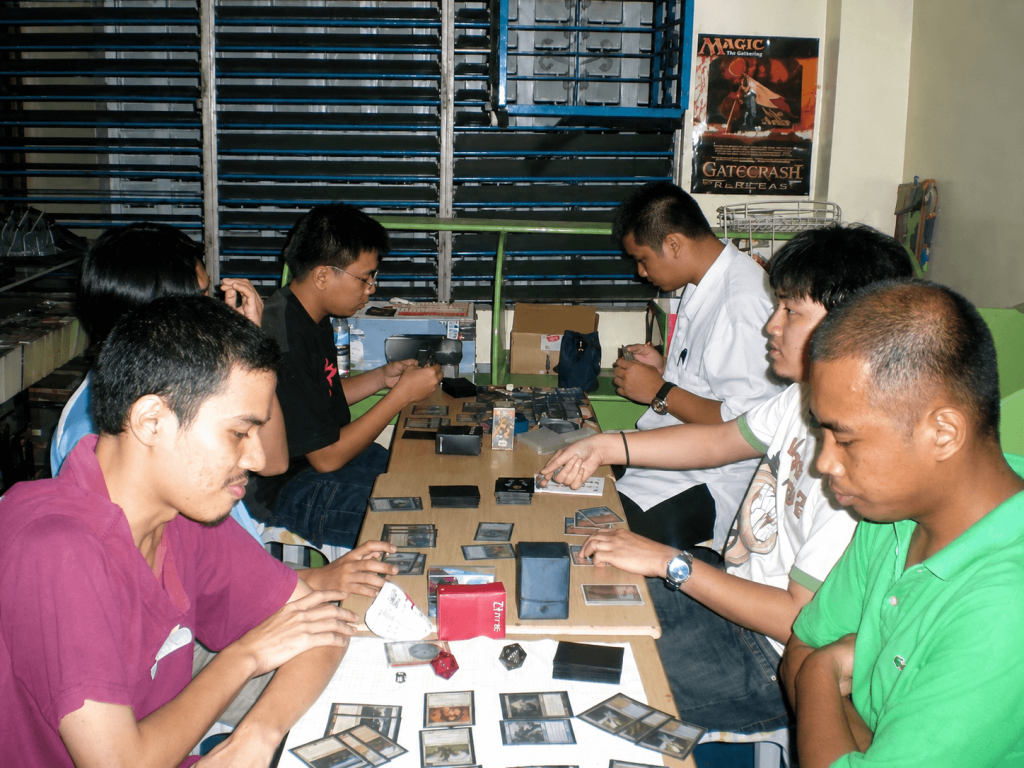
There was a point in our Magic: The Gathering journey when our small group’s card pool finally started to grow into something real. Before that, most of us only worked with whatever random cards we happened to own or trade for, but eventually our collections became interconnected.
Suddenly, deckbuilding wasn’t just about making do with leftovers—it became a collaborative process filled with testing, borrowing, trading, and constant experimentation. That period felt special because every new card opened up possibilities not just for one person, but for the entire group.
Even then, building decks was never easy financially. Some of the key components we needed were expensive by our standards at the time, especially staple lands, removal spells, and chase rares that dominated competitive lists.
I remember spending weeks trying to save enough just to buy a single important card, carefully deciding whether it was worth the investment or if I could settle for a cheaper alternative. Sometimes we would split purchases, lend cards to each other for tournaments, or wait patiently for someone in the local scene to trade. Every acquisition felt meaningful because we knew how hard it was to complete a deck one piece at a time.
The local metagame in Iloilo City also heavily influenced the way we built our decks. You couldn’t simply copy a tournament-winning list online and expect it to work perfectly in local events. Certain archetypes were far more common in our area, and you had to prepare for them specifically.
If aggressive decks dominated the local tournaments, you needed more efficient removal and early blockers. If control players were everywhere, you had to think about resiliency and sideboard options. Deckbuilding became less about theory and more about understanding the people you expected to face every weekend.
What made that era memorable was how much discussion and debate surrounded every decision. We would spend hours talking about mana curves, sideboard slots, and whether a certain card deserved a place in the main deck.
Sometimes we’d test endlessly only to realize the deck still lacked consistency, forcing us to rebuild parts of it from scratch. There was frustration in that process, especially when expensive cards were out of reach, but there was also satisfaction in finding creative solutions with the cards we already owned.
Looking back, those struggles shaped the way I appreciate deckbuilding today. It taught me that building a deck isn’t only about assembling powerful cards—it’s about adapting, understanding your environment, and making the best possible decisions with limited resources.
Our shared card pool and the challenges of the Iloilo metagame forced us to become more thoughtful players. In many ways, those experiences made the game more rewarding, because every successful deck felt earned through patience, teamwork, and countless hours of trial and error.
Thanks for reading.